June 2026

Global News

Global Economies Focus on Sustainable Growth

Promoting sustained economic growth, productive employment and decent work for all is essential for a sustainable future. Goal 8 focuses on creating quality jobs, promoting entrepreneurship, and fostering economic growth that benefits everyone. The journey towards achieving Goal 8 faces significant challenges due to the aftermath of COVID-19, trade tensions, rising debt in developing countries and geopolitical conflicts. These factors collectively threaten global economic growth. Although global real GDP per capita saw a rebound in 2021, it experienced a slowdown in 2022 and is projected to slow to just 1.5 per cent in 2025 due to heightened trade tensions and policy uncertainty. While the unemployment rate fell to a record low of 5.0 per cent in 2024, nearly 58 per cent of workers remained informally employed, with persistently high rates in LDCs and sub-Saharan Africa. However, significant disparities across gender and age persist. More progress is needed to increase employment opportunities, especially for young people, reduce informal employment and labour market inequality (particularly in terms of the gender pay gap), promote safe and secure working environments, and improve access to financial services to ensure sustained and inclusive economic growth. Accelerating progress demands sustainable economic policies, support for entrepreneurship and innovation, formalization of the informal economy, safeguards of workers’ rights, social justice, and inclusive employment opportunities, especially for women and youth. What does “decent work” mean? Decent work means opportunities for everyone to get work that is productive and delivers a fair income, security in the workplace and social protection for families, better prospects for personal development and social integration. What are the challenges? A persistent lack of decent work opportunities, insufficient investments and under-consumption contribute to the erosion of the basic social contract: that all must share in progress. The creation of quality jobs remains a major challenge for almost all economies. Achieving Goal 8 will require a wholesale reform of the financial system to tackle rising debts, economic uncertainty and trade tensions, while promoting equitable pay and decent work for young people. Sustained and inclusive economic growth can drive progress, create decent jobs for all and improve living standards. How many people are unemployed? The global unemployment rate fell to a record low of 5.0 per cent in 2024, down from 6.0 per cent in 2015. But disparities and vulnerabilities remain in the labour market, particularly for youth and women. Young people aged 15–24 continue to face severe difficulties in securing decent employment: in 2024, 259 million youth — one in five globally — were not in education, employment or training (NEET). Young women face the greatest barriers and are twice as likely to be NEET as young men. What can we do to fix these issues? Providing youth the best opportunity to transition to a decent job calls for investing in education and training of the highest possible quality, providing youth with skills that match labour market demands, giving them access to social protection and basic services regardless of their contract type, as well as leveling the playing field so that all aspiring youth can attain productive employment regardless of their gender, income level or socio-economic background. Governments can work to build dynamic, sustainable, innovative and people-centred economies, promoting youth employment and women’s economic empowerment, in particular, and decent work for all. Implementing adequate health and safety measures and promoting supportive working environments are fundamental to protecting the safety of workers, especially relevant for health workers and those providing essential services.

Global News

FIFA World Cup 2026 Enters Its Final Stages

On July 19, after 103 matches have been played, only two teams will remain standing at the 2026 FIFA World Cup. Those two nations, each chasing soccer immortality, will meet at New York New Jersey Stadium in what is expected to be one of the biggest sporting events ever held in the United States. So which countries are most likely to make it all the way to the title game? Now that the group stage is over, let’s take a look at the latest odds to reach the 2026 FIFA World Cup final at FanDuel Sportsbook as of June 30. This page may contain affiliate links to legal sports betting partners. If you sign up or place a wager, FOX Sports may be compensated. Read more about Sports Betting on FOX Sports. To Reach World Cup Final  France: +130 (bet $10 to win $23 total)Argentina: +175 (bet $10 to win $27.50 total)England: +320 (bet $10 to win $42 total)Spain: +350 (bet $10 to win $45 total)Brazil: +550 (bet $10 to win $65 total)Portugal: +700 (bet $10 to win $80 total)Morocco: +750 (bet $10 to win $85 total)Colombia: +1100 (bet $10 to win $120 total)Norway: +1400 (bet $10 to win $150 total)USA: +1400 (bet $10 to win $150 total)Mexico: +2000 (bet $10 to win $210 total)Belgium: +2000 (bet $10 to win $210 total)Switzerland: +2200 (bet $10 to win $230 total) Here’s what to know about this oddsboard.  Long Shot History: While no true long shot has ever won the World Cup, Croatia was one of the biggest long shots ever to reach a World Cup final, entering the 2018 tournament at 30-1 odds. While the Croatians ultimately fell to France in the final, they still rewarded bettors with a massive payout in this market after their stunning run to the championship. The Favorites: France and Argentina are the two favorites to reach the final. Oddsmakers view the two powerhouses as the most likely finalists, with many expecting at least one, and potentially both, to play for the trophy on July 19. France rose after sweeping its first three games of the tournament and clinching Group I. Meanwhile, after winning Group J and drawing the easier side of the bracket, Argentina jumped up the board. If the odds hold true, we would get a rematch of the iconic 2022 World Cup final, a game many consider to be the greatest World Cup match of all time.  Biggest Riser: On Monday, Morocco defeated one of the World Cup favorites, in a dramatic penalty shootout win over the Netherlands. As a result, the Atlas Lions have surged up the oddsboard from +2200 to +750 to make the final.

Global News

Global Focus on Climate Resilience After Extreme Weather Events

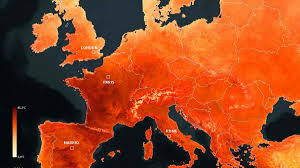
An extraordinary heatwave in Europe has shattered numerous temperature records and had major impacts on human health, ecosystems, agriculture, infrastructure and labour productivity. It is accompanied by localized violent storms and in some areas by worsening drought and the risk of wildfires.  Share: Related Topics WMO, its members and partners are mobilizing with early warnings and coordinated heat-health action plans to try to save lives and inform decision-making on how to minimize economic damage and disruption. Extreme heat is expected to occur at increasing frequency and intensity and duration, according to the Intergovernmental Panel on Climate Change. Europe is the world’s most rapidly warming continent.   “Heatwaves like this are what we expect to see in a changing climate,” said John Kennedy, head of climate information at WMO. “In the 50 years since the historic heatwave in 1976, Europe as a whole has warmed by around two degrees. It’s the fastest warming continents and extremes of temperature have increased too,” he said. World Health Director-General Tedros Adhanom Ghebreyesus   said that more than 1300 excess deaths have been recorded since 21 June linked to the extreme heat in Europe. More than 150 million people on the continent were impacted, he wrote in a post  on X on 28 June.   The heatwave – which moved up from the Iberian Peninsula – is expected to spread   over large parts of Western, Central, and Southern Europe and the Balkans by 30 June, according to Climate Watch guidance issued by one of WMO’s regional European climate monitoring centres, which is led by the Deutscher Wetterdienst (DWD).   The regional centre’s Climate Watch information is intended as guidance for National Meteorological and Hydrological Services who are responsible for issuing advisories and warnings in their own territories.   Snapshot of records (starting with most recent) The WMO Secretariat is compiling a regularly updated snapshot of temperature records. This is not a fully exhaustive list and some of the figures are provisional. It is intended as a guide to help in media reporting and to provide information on the scale of the extreme heat. Germany broke new temperature records for three consecutive days, with the town of Coschen in eastern Germany near the border with Poland reporting 41.7°C on 28 June. A total 252 weather stations recorded all time temperature records – the highest ever. According to DWD, 46 stations throughout Germany recorded temperatures of above (40°C) -until 27 June.   Overnight temperature records also tumbled. A weather station in East Saxony reported an overnight minimum temperature of 29.4 °C. DWD termed the heatwave as “historic.”   Hungary: A new June temperature record of 40.7°C was recorded near the capital Budapest on 28 June, with heat forecast to intensify further. Poland also recorded a new all-time temperature record, provisionally of 40.5°C, as did the Czech Republic. Austria set a new June temperature record of 40.0 °C in the Vienna City, with a Red Alert continuing for the capital on 29 June, according to Geosphere Austria.   The United Kingdom broke the June temperature record for three consecutive days, with  37.3 °C recorded in southern England on 25 June –  a provisional figure which was likely to be revised upwards. The UK’s Met Office issued Red Warnings for Extreme Heat once again for 26 June – the first time in the history of the current weather warnings system that red warnings have been issued for three straight days.   This comes just weeks after May also saw UK daily temperature records broken. In the Netherlands, the Dutch national meteorological service, KNMI, issued an unprecedented Red Alert for extreme heat for eight provinces for 26 June for 26 June, and reported a number of new station records, and a new national June temperature record of 39.4 °C.   Denmark set a new all time high temperature of 37.0 °C in two locations, breaking a record set in 1975, according to the Danish Meteorological Institute. Switzerland set a new June temperature record of 39°C in the northern city of Basel, according to Meteo-Suisse.

Global News

Oil Prices Ease After Middle East Tensions Stabilize

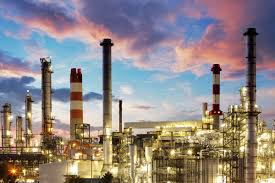
International crude oil markets showed signs of stability after recent diplomatic developments between the United States and Iran helped ease concerns about potential supply disruptions in the Middle East. The improvement in market sentiment has reduced fears of a major oil supply crunch and contributed to relatively steady crude prices during recent trading sessions. Energy traders and policymakers worldwide are closely monitoring the situation, as developments in the Middle East often have a significant impact on global oil markets. The latest easing of tensions has provided temporary relief to investors and importing nations that were concerned about rising energy costs. While crude prices have cooled from recent highs, analysts caution that future market movements will depend on geopolitical developments, global demand, and supply conditions in the coming weeks.

Global News

AI Investment Continues to Drive Global Technology Markets

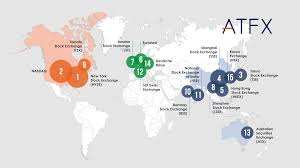
AI investment continues to drive global technology markets, with a record high private AI investment in 2024 and a significant increase in corporate AI investment. The U.S. leads in global AI private investment, with a substantial portion of the investment in generative AI. The use of AI is on the rise, with a notable increase in organizations reporting AI use and generative AI in business functions. Microsoft and Google have secured nuclear energy agreements to support AI operations, indicating the growing reliance on renewable energy sources for AI infrastructure. AI is also boosting productivity and bridging skill gaps, with studies confirming its positive impact on productivity.  Stanford UniversityThe investment landscape is characterized by increased focus on AI-native companies, a shift towards customer-facing AI, and continued attention by PE firms on investments that drive material cost efficiencies. Venture capital funding in AI has seen a record year, with a significant increase in AI deals and a rise in the value of those deals. Despite a decline in total private capital fundraising, a substantial proportion of capital is earmarked for AI investments, with strategic M&A involving AI-related targets showing strong growth.  FTI Consulting+1Gartner’s forecast indicates that worldwide AI spending will total nearly $1.5 trillion in 2025, driven by investments in AI infrastructure expansion and the integration of AI into products such as smartphones and PCs. This expansion is expected to continue into 2026, with overall global AI spending projected to top $2 trillion.  Ropes & GrayThe AI investment landscape is dynamic, with countries competing aggressively to embrace this revolutionary technology, reflecting intense competition across continents. The economic impact of AI is significant, with generative AI projected to generate $1.8 trillion in annual revenue by 2032, representing up to 16 percent of global technology spending.

Global News

Europe Battles Record-Breaking Heatwave

An extraordinary heatwave in Europe has shattered numerous temperature records and had major impacts on human health, ecosystems, agriculture, infrastructure and labour productivity. It is accompanied by localized violent storms and in some areas by worsening drought and the risk of wildfires.  Share: Related Topics WMO, its members and partners are mobilizing with early warnings and coordinated heat-health action plans to try to save lives and inform decision-making on how to minimize economic damage and disruption. Extreme heat is expected to occur at increasing frequency and intensity and duration, according to the Intergovernmental Panel on Climate Change. Europe is the world’s most rapidly warming continent.   “Heatwaves like this are what we expect to see in a changing climate,” said John Kennedy, head of climate information at WMO. “In the 50 years since the historic heatwave in 1976, Europe as a whole has warmed by around two degrees. It’s the fastest warming continents and extremes of temperature have increased too,” he said. World Health Director-General Tedros Adhanom Ghebreyesus   said that more than 1300 excess deaths have been recorded since 21 June linked to the extreme heat in Europe. More than 150 million people on the continent were impacted, he wrote in a post  on X on 28 June.   The heatwave – which moved up from the Iberian Peninsula – is expected to spread   over large parts of Western, Central, and Southern Europe and the Balkans by 30 June, according to Climate Watch guidance issued by one of WMO’s regional European climate monitoring centres, which is led by the Deutscher Wetterdienst (DWD).   The regional centre’s Climate Watch information is intended as guidance for National Meteorological and Hydrological Services who are responsible for issuing advisories and warnings in their own territories.   Snapshot of records (starting with most recent) The WMO Secretariat is compiling a regularly updated snapshot of temperature records. This is not a fully exhaustive list and some of the figures are provisional. It is intended as a guide to help in media reporting and to provide information on the scale of the extreme heat. Germany broke new temperature records for three consecutive days, with the town of Coschen in eastern Germany near the border with Poland reporting 41.7°C on 28 June. A total 252 weather stations recorded all time temperature records – the highest ever. According to DWD, 46 stations throughout Germany recorded temperatures of above (40°C) -until 27 June.   Overnight temperature records also tumbled. A weather station in East Saxony reported an overnight minimum temperature of 29.4 °C. DWD termed the heatwave as “historic.”   Hungary: A new June temperature record of 40.7°C was recorded near the capital Budapest on 28 June, with heat forecast to intensify further. Poland also recorded a new all-time temperature record, provisionally of 40.5°C, as did the Czech Republic. Austria set a new June temperature record of 40.0 °C in the Vienna City, with a Red Alert continuing for the capital on 29 June, according to Geosphere Austria.   The United Kingdom broke the June temperature record for three consecutive days, with  37.3 °C recorded in southern England on 25 June –  a provisional figure which was likely to be revised upwards. The UK’s Met Office issued Red Warnings for Extreme Heat once again for 26 June – the first time in the history of the current weather warnings system that red warnings have been issued for three straight days.   This comes just weeks after May also saw UK daily temperature records broken. In the Netherlands, the Dutch national meteorological service, KNMI, issued an unprecedented Red Alert for extreme heat for eight provinces for 26 June for 26 June, and reported a number of new station records, and a new national June temperature record of 39.4 °C.   Denmark set a new all time high temperature of 37.0 °C in two locations, breaking a record set in 1975, according to the Danish Meteorological Institute. Switzerland set a new June temperature record of 39°C in the northern city of Basel, according to Meteo-Suisse.

Latest News

Development Projects Continue to Drive Growth in Mahabubnagar

District authorities continue to focus on infrastructure development, public services, irrigation projects, and tourism initiatives aimed at strengthening economic growth. Key attractions such as Pillalamarri, Koilsagar Dam, and Mayuri Park remain important contributors to the district’s tourism sector. Officials stated that ongoing investments in transportation, agriculture, and public facilities are expected to create new opportunities for residents and businesses.

Latest News

Road Safety Awareness Intensified After Fatal Highway Accident

A horrific road accident involving a car and a speeding sports bike claimed the lives of five people, including two children, in Telangana’s Mahabubnagar district. The incident took place after midnight on Sunday, the police said. The mishap occurred when the car was taking a U-turn and a bike suddenly rammed into it, per the police. The sports bike was allegedly travelling at a speed of 140 kmph at the time of the incident. Advertisement Locals have claimed that the road has become a hub for illegal bike racing. (Visuals: Reporter)

Latest News

NH-167 Expansion Project Expected to Improve Connectivity

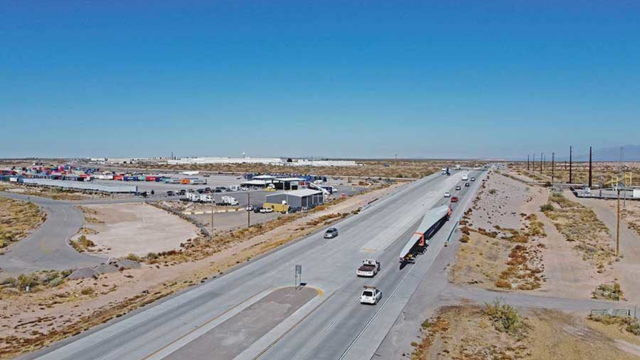
Currently, connectivity between Gudebellur to Mahabubnaagr on existing National Highway NH-167 experience significant travel time delay due to very poor geometry and traffic congestion at town area, passing through highly urbanized towns/villages i.e Gudebellur, Magnoor, Makthal, Marikal, Devarkadra, Jaklair, Yeligandla, and Banderpally. To address these challenges, the project is proposed to be developed as 4 lane standard. The project will provide significant benefit to Narayanpet & Mahabubnagar districts in the state of Telangana. This will enhance the efficiency of freight movement, reducing logistics cost and driving socio-economic growth in the region. The project alignment integrates with 2 major National Highways (NH-150 & NH-167N) providing seamless connectivity to key economic, social, and logistics nodes across Telangana. Additionally, the upgraded corridor will enhance multi-modal integration and seamless connectivity by provide connectivity to three PM GatiShakti Economic Nodes, nine Social Nodes and seven Logistic Nodes thereby facilitating faster movement of goods and passengers across the region. Upon completion, the NH-167 upgradation work will play a pivotal role in regional economic growth, strengthening connectivity between major religious and economic centers and opening new avenues for trade and industrial development. The proposed access-controlled 4-lane project with the length of 80.01 km will thus generate close to 14.4 lakh person-days of direct employment and 17.9 lakh person-days of indirect employment. The project will also induce additional employment opportunities due to increase in economic activity in the vicinity of the proposed corridors.

Listings
News
Home
Jobs
Contact