
About Us
Home > About
The Land of Heritage, Agriculture, and Opportunity
Discover Mahabubnagar
Mahabubnagar, affectionately known as Palamoor, is one of Telangana’s most historically significant and rapidly developing districts. Located in the southern part of the state, the district serves as an important gateway connecting Telangana with neighboring regions while preserving a rich cultural and historical legacy.
Renowned for its agricultural strength, vibrant communities, and emerging infrastructure, Mahabubnagar has transformed into a dynamic district that balances tradition with progress. From ancient heritage sites and historic forts to modern highways, irrigation projects, and educational institutions, the district continues to play a vital role in the growth and development of Telangana.
The district is blessed with diverse landscapes, fertile agricultural lands, and important water resources that support thousands of farming families. Major projects such as the Palamuru-Rangareddy Lift Irrigation Scheme are expected to further strengthen agriculture and improve the livelihoods of rural communities.
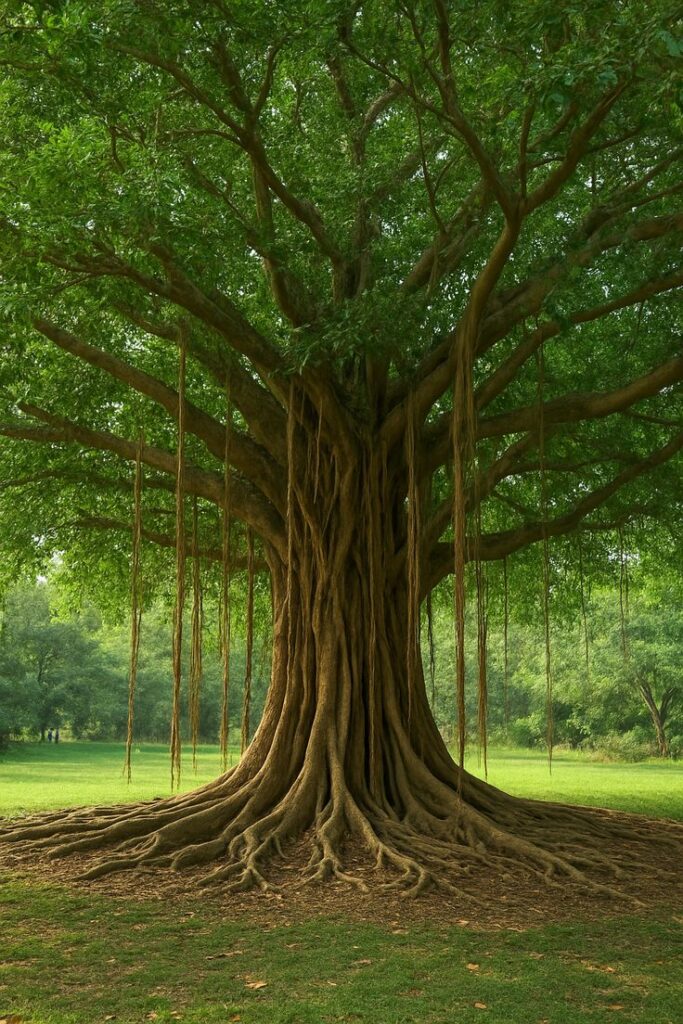
Mahabubnagar is also home to several notable attractions, including the historic Koilkonda Fort, the iconic Pillalamarri Banyan Tree, Koilsagar Dam, and various cultural landmarks that reflect the region’s rich heritage and traditions. These destinations attract visitors from across Telangana and contribute to the district’s growing tourism potential.
Today, Mahabubnagar stands as a symbol of resilience, growth, and opportunity. With ongoing investments in infrastructure, public services, education, healthcare, and business development, the district continues to create new possibilities for residents, entrepreneurs, and visitors alike.
Understanding the People of Mahabubnagar
Population at a Glance
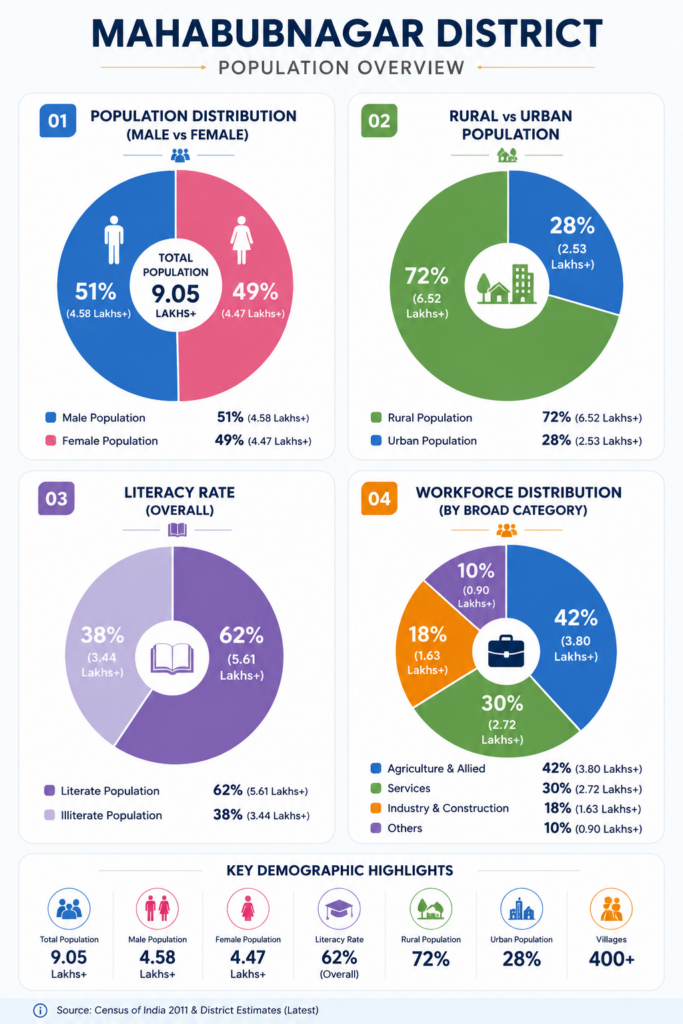
The strength of Mahabubnagar lies in its people. Home to a diverse and vibrant population, the district represents a unique blend of rural traditions, urban growth, cultural heritage, and economic development. The population contributes significantly to the district’s agricultural productivity, business activities, public services, education sector, and overall economic progress.
Over the years, Mahabubnagar has experienced steady population growth driven by improved infrastructure, educational opportunities, healthcare services, and employment prospects. The district consists of numerous villages, towns, and urban centers, creating a balanced demographic profile that reflects both traditional rural lifestyles and modern urban aspirations.
The district’s young workforce, growing literacy rates, and increasing urbanization continue to support development across multiple sectors. At the same time, strong community values and cultural traditions remain an important part of everyday life in Mahabubnagar.
As the district continues to evolve, investments in education, healthcare, public services, and employment generation remain essential to ensuring sustainable growth and improving the quality of life for all residents.
“The people of Mahabubnagar are the foundation of its progress, contributing to the district’s cultural richness, economic growth, and vision for a prosperous future.”
Cultivating Growth, Sustaining Livelihoods
The Agricultural Heart of Mahabubnagar
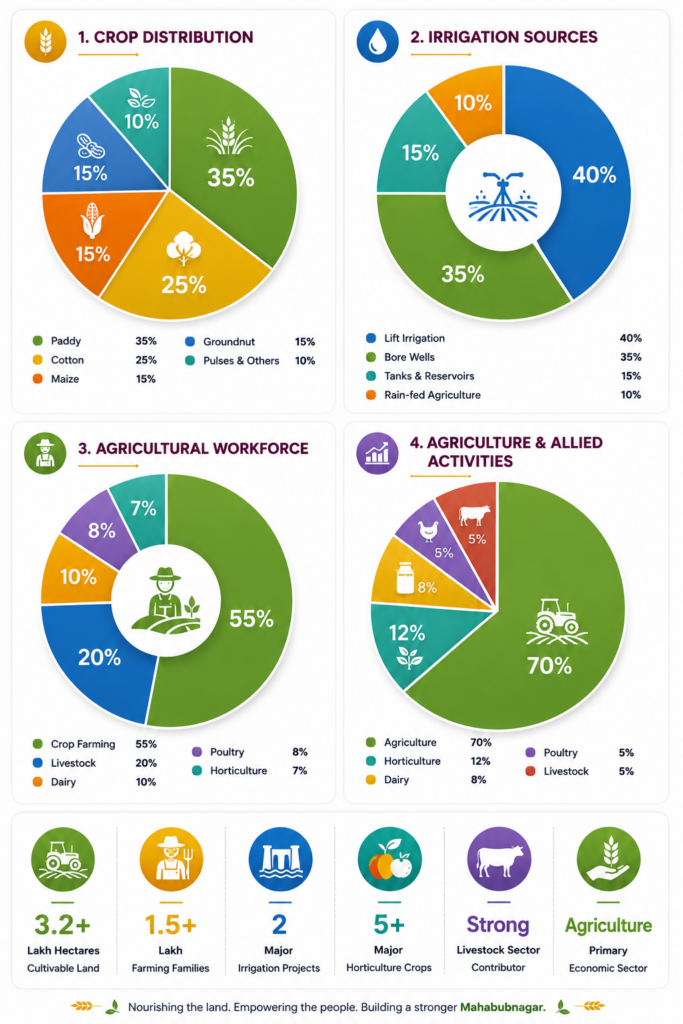
Agriculture has long been the backbone of Mahabubnagar’s economy, supporting thousands of farming families and contributing significantly to the district’s overall development. Known historically as Palamoor, the district has a strong agricultural heritage that continues to shape its economy, culture, and way of life.
The majority of rural households depend directly or indirectly on farming and allied activities such as livestock rearing, dairy farming, poultry, and horticulture. Over the years, improvements in irrigation infrastructure, modern farming techniques, and government support programs have helped farmers increase productivity and improve their livelihoods.
Major irrigation projects such as the Palamuru-Rangareddy Lift Irrigation Scheme and Koilsagar Project are expected to strengthen water availability, enabling farmers to cultivate larger areas and diversify their crops. The district is witnessing increasing adoption of modern irrigation systems, scientific farming methods, and climate-resilient agricultural practices.
In addition to traditional field crops, horticulture has emerged as a growing sector, with farmers cultivating fruits, vegetables, and commercial crops that contribute to income generation and rural employment.
Mahabubnagar continues to play an important role in Telangana’s agricultural economy, combining traditional farming knowledge with modern agricultural innovations to build a more sustainable future.
- Backbone of the district economy.
- Supported by major water projects.
- Paddy, cotton, maize, and groundnut.
Geography & Area Overview
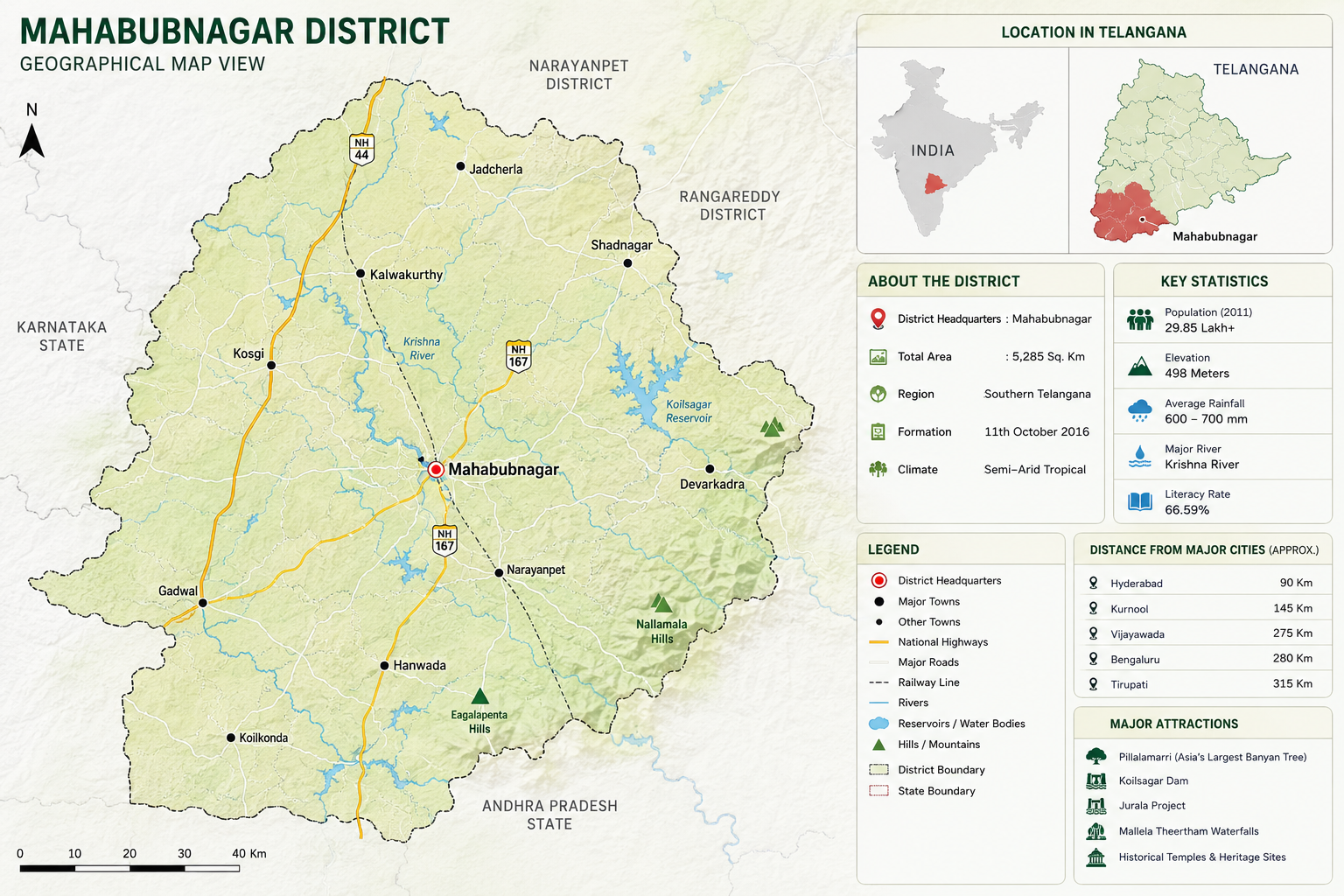
- 📍 Location : Southern Telangana, India
- 🗺 Total Area : 5,285 Sq. Km
- ⛰ Elevation : 498 Meters Above Sea Level
- 🌦 Climate : Semi-Arid Tropical
- 🌧 Annual Rainfall : 600–700 mm
- 🌡 Temperature Range : 20°C – 42°C
- 💧 Major River Basin : Krishna River Basin
- 🏞 Key Reservoir : Koilsagar Reservoir
- 🛣 Major Highways : NH-44 & NH-167
- 🌾 Land Use : Predominantly Agricultural
- 📅 District Formation : 11 October 2016
The Rich History and Heritage of Mahabubnagar
Journey Through Time
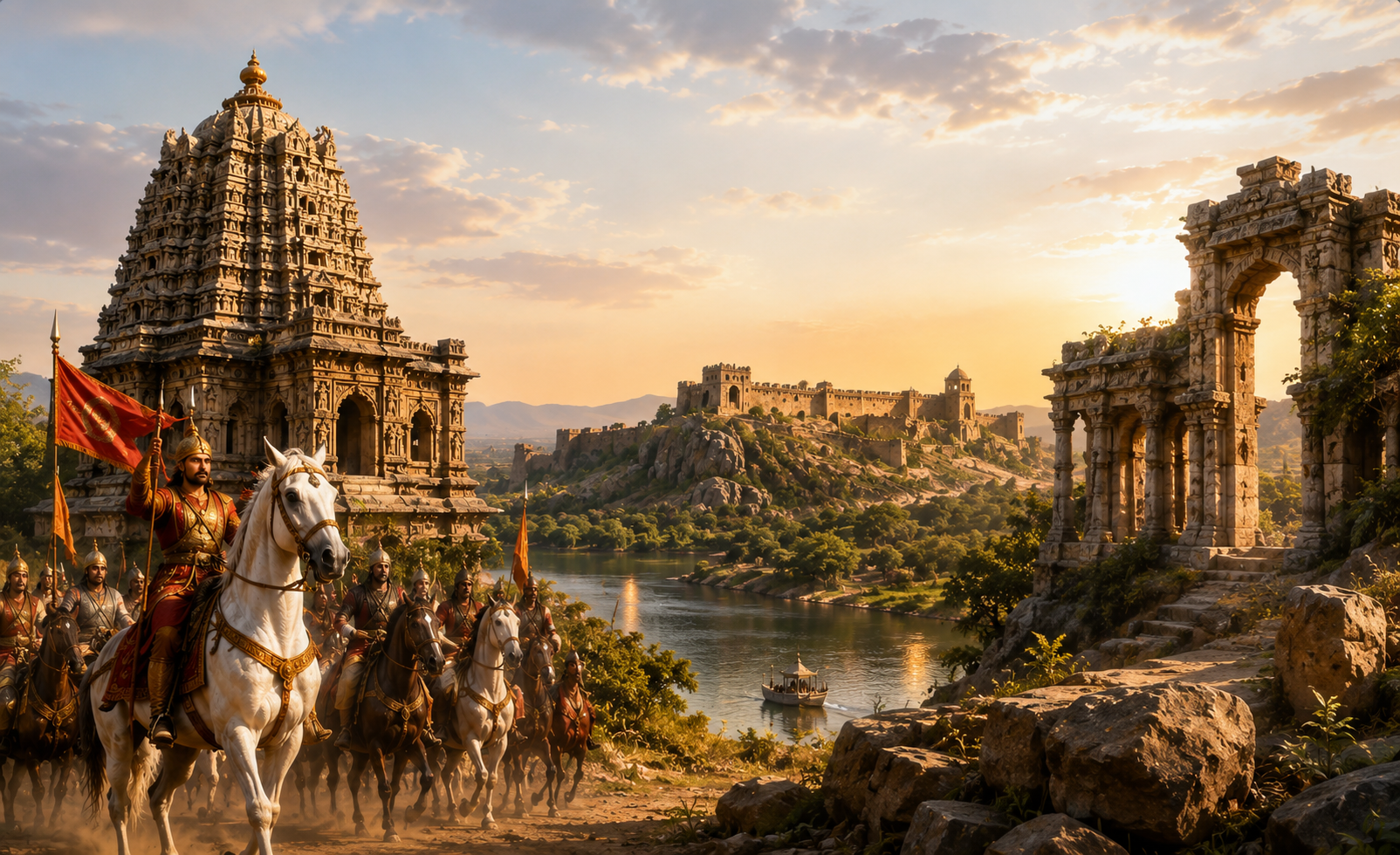
Known historically as Palamoor, Mahabubnagar was named after Mir Mahbub Ali Khan, the sixth Nizam of Hyderabad. The district’s journey spans ancient civilizations, royal dynasties, and modern development, making it a significant part of Telangana’s history and progress.

The district was named Mahabubnagar after Mir Mahbub Ali Khan, the sixth Nizam of Hyderabad. Before that, the region was widely known as Palamoor, a name that remains deeply connected to its identity today.
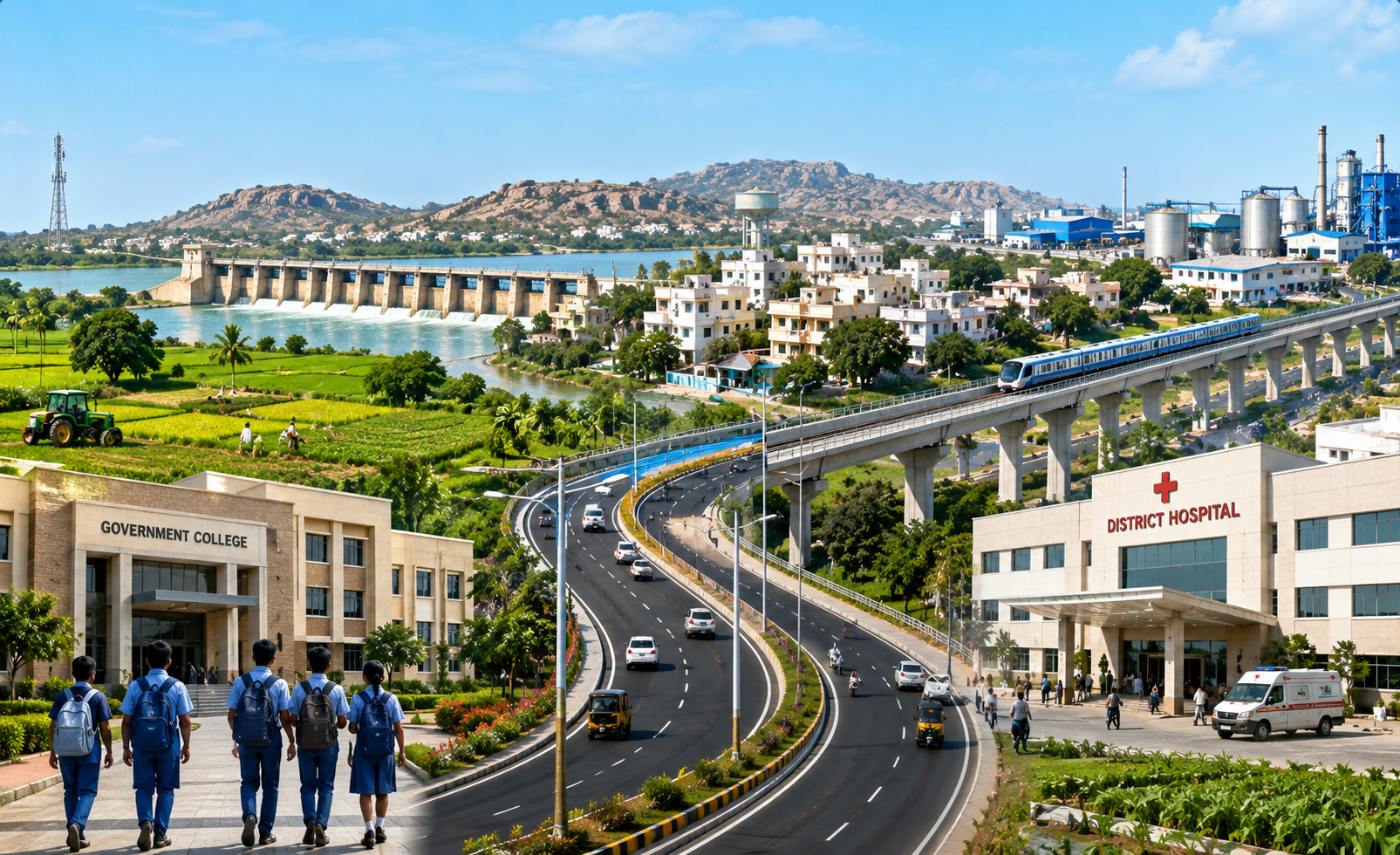
Following Hyderabad State's integration into India, Mahabubnagar experienced growth in education, agriculture, transportation, and public services. Several irrigation and infrastructure projects were introduced during this period.

Following the reorganization of districts in Telangana, Mahabubnagar was restructured into its present administrative form. The district continues to play an important role in agriculture, commerce, tourism, and regional development.
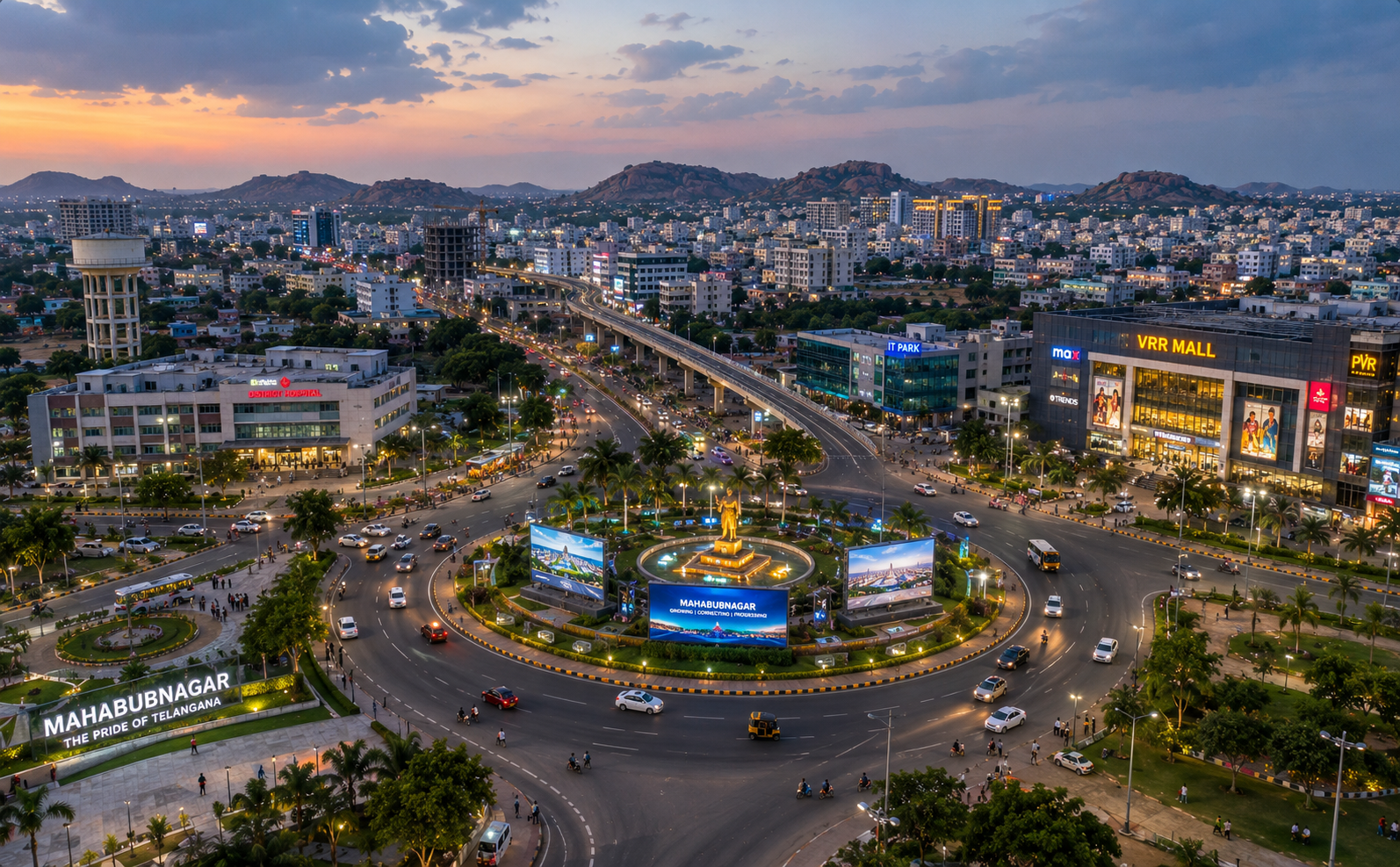
Today, Mahabubnagar stands as a rapidly developing district known for its agricultural strength, irrigation projects, tourism attractions, educational institutions, and growing infrastructure.
Economic Growth & Revenue
Driving Progress Through a Diverse Economy
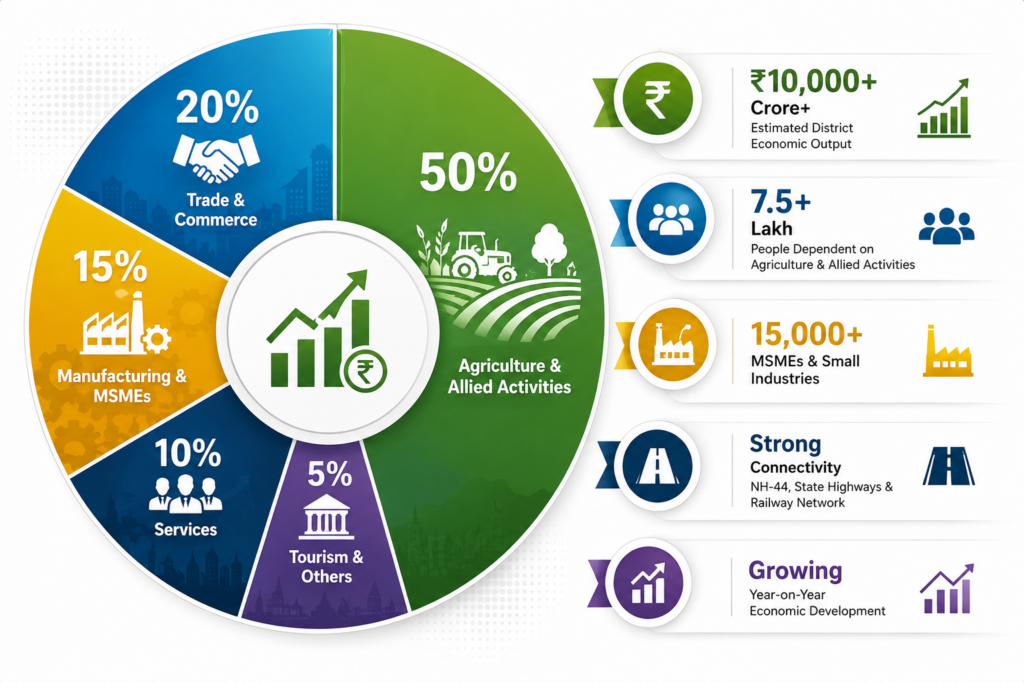
Mahabubnagar’s economy is driven by a strong agricultural foundation, supported by growing industries, trade, and the service sector. Improved irrigation, expanding infrastructure, and thriving local businesses have strengthened the district’s contribution to Telangana’s economic development.
With continued investments in transportation, education, healthcare, and MSMEs, Mahabubnagar is creating new opportunities for employment, entrepreneurship, and sustainable growth. Today, the district continues to progress as a balanced regional economy with a promising future.
